
Table of Contents
- Understanding Scale Ratios for Classic Vehicle Models
- Diecast vs Resin Models: Which Is Right for Your Collection
- Diecast Model Car Display Ideas for Your Space
- How to Clean Diecast Models and Preserve Condition
- Selecting Authentic and Limited Edition Releases
- Classic Vehicle Models Worth Collecting: Popular Eras and Styles
- Valuing Your Vintage Model Collection
- Frequently Asked Questions
Last Updated: September 18, 2026
Understanding Scale Ratios for Classic Vehicle Models
Scale ratio is the first decision when assembling a classic vehicle models display. A 1:18 scale model is roughly 25 centimetres long, while a 1:43 scale sits around 10 centimetres. The smaller the second number, the larger the finished model.
Most collectors gravitate toward 1:18 and 1:24 scales because they balance detail with practicality. At 1:18, you get substantial presence on a shelf and enough surface area for fine paint work and interior detailing. The automotive collector community standards confirm that these scales dominate serious collections because they're large enough to appreciate authentic features without requiring a dedicated museum-sized display area.
1:43 and 1:64 scales suit broad collections, you can display dozens without overwhelming a room. The trade-off is less detail and visual impact individually, but grouped together they create impressive visual weight.
Diecast vs Resin Models: Which Is Right for Your Collection
Diecast models dominate the market because they're affordable, durable, and detailed. Cast from metal alloys with plastic interiors and rubber tyres, they resist yellowing, brittleness, and UV damage better than resin.
Resin models are hand-crafted, limited production, museum-quality pieces costing three times more than diecast equivalents. You pay for authenticity, hand-painted finishes, functional opening parts, and photographed-quality interiors.
Diecast is forgiving, move, dust, and display it without UV concerns. Resin demands climate control, UV-filtered cases, and minimal handling. Choose diecast for interactive collections; resin for curated museum pieces.
| Characteristic | Diecast | Resin |
|---|---|---|
| Starting Price | $40-$100 | $150-$500+ |
| Detail Level | Very Good | Exceptional |
| Durability | Excellent | Good (UV-sensitive) |
| Opening Parts | Limited | Often functional |
| Best For | Active collectors | Investment-grade displays |
| Maintenance | Minimal | Requires climate control |
Diecast Model Car Display Ideas for Your Space
The most common mistake is treating display like storage. Real display means intentional arrangement, proper lighting, breathing room, and thoughtful integration into your home.
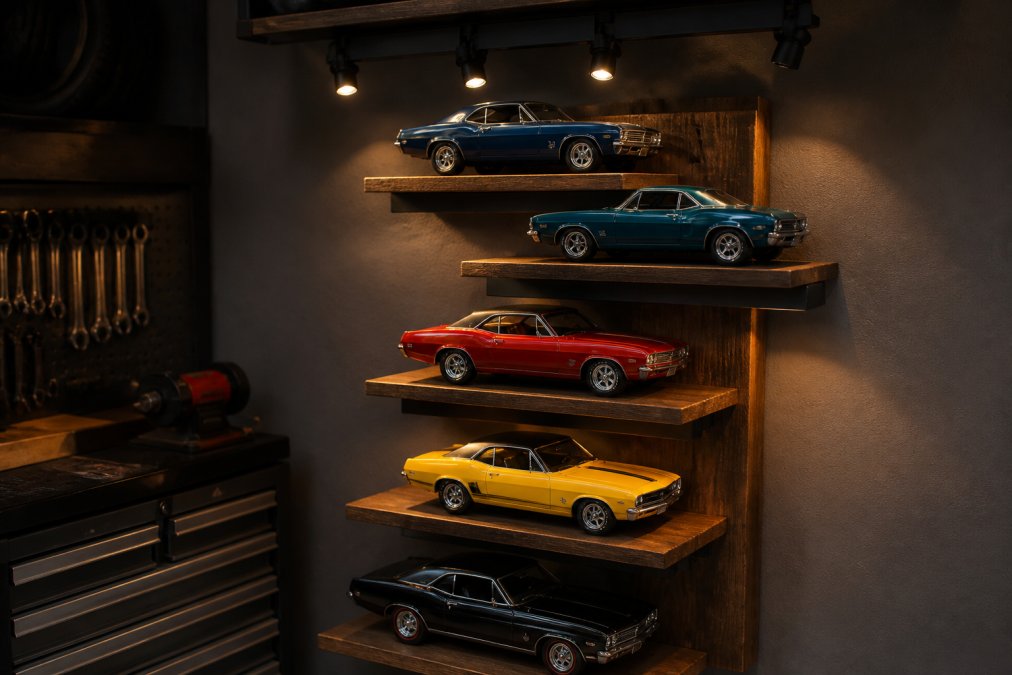
Display Ergonomics and Sightline Placement
Position shelves at eye level (140-160 centimetres from the floor). In living rooms, align with seated eye level, not standing height. This transforms a collection from decoration into a focal point.
A shelf projecting 25-30 centimetres allows viewers to step back. In narrow spaces, use shallow floating shelves (15-20 centimetres). Position displays where people naturally pause, beside doorways, above console tables, in alcoves.
Integrating Collections into Room Design
Integrate displays into room design by echoing existing colours and materials. Wooden shelves suit warm tones; metal-frame glass cabinets suit modern décor.
Use a dark, neutral backdrop (deep grey, charcoal, or black) to make models pop. Light backgrounds wash out detail. Paint a 1-1.5 metre section behind the display for maximum visual impact.
Group models by colour to create cohesion. Separate multi-colour collections into different shelves or use colour blocking, reds together, blues together, to create visual rhythm.
Height Variation and Spatial Rhythm
Stagger model heights using plinths or display stands (5-10 centimetres) to create visual rhythm and ensure every model gets sightline attention.
Place taller models (1:18) at the back or on higher risers, smaller models (1:43, 1:64) in front. Use wooden risers, acrylic blocks, or fabric-covered book stacks for elevation.
Shelving and Cabinet Options
Open shelving works for diecast. Glass-fronted cabinets offer better protection from dust and knocks. Acrylic cases cost less but scratch more easily and yellow over 5-10 years.
Use solid wood or quality plywood (particleboard sags under 8-12 kilograms). Aim for at least 30 centimetres depth so models sit comfortably without crowding the front edge.
Modular shelving systems allow reconfiguration as your collection grows, preventing the need to dismantle existing displays.
Lighting and UV Protection
Use warm LED track lights (2700-3000K) positioned above or behind shelves to bring out paint depth and chrome. Avoid direct sunlight, which fades paint and warps plastic. Position displays on north-facing walls or away from windows.
UV-filtering film (£15-£40 per square metre) extends paint life. If displaying near windows, use UV-blocking curtains or blinds during peak sun hours (10 a.m.-4 p.m.).
Mount LED strips along the top or sides of glass cabinets to avoid glare. Dimming lights when not in use further protects paint.
How to Clean Diecast Models and Preserve Condition
Use a soft microfibre cloth for regular maintenance. For deeper cleaning, dampen with distilled water (tap water leaves mineral residue). Air-dry completely before returning to shelf.
Use a soft-bristled natural horsehair brush for crevices. Avoid compressed air, which forces dust into seams and damages delicate parts.
Climate Control and Environmental Preservation
Store models in climate-controlled spaces (18-22°C, 40-50% humidity) to prevent paint checking, plastic warping, and metal corrosion.
Temperature swings cause paint checking. If displaying in uninsulated spaces, move models to interior rooms during extreme seasons or use a dehumidifier and heater.
Monitor humidity with a hygrometer (£10-£20). Use silica gel packets in cabinets to maintain 40-50% humidity.
Dust-Proofing Display Areas
Glass-fronted cabinets reduce dust accumulation by 70-80%. For open shelves, add removable acrylic or glass covers.
Glass-fronted cabinets with magnetic catches provide excellent protection at reasonable cost.
Position shelves away from high-traffic areas and heating/cooling vents, which accelerate dust circulation.
Minor Restoration and Part Replacement
Loose doors often result from worn hinges. Gently bend the hinge pin with pliers to increase tension. Replacement parts are available from specialist suppliers for popular models.
Source missing parts from collector forums or use 3D-printed replacements (£5-£15).
For cracked windscreens, apply clear epoxy adhesive along the crack with a toothpick for a nearly invisible repair.
Never attempt repainting, amateur work reduces value more than original damage.
Cataloging and Inventory Management
Use a spreadsheet to track model name, scale, manufacturer, year acquired, condition, value, and location. Add photos for visual searching.
For 100+ models, use dedicated collector software like Catawiki or specialist diecast databases to track values and market data.
Number your shelves and note which models occupy each to prevent duplicate purchases.
Keep original packaging and documentation, mint models with boxes command 40-60% premiums. Store boxes flat in acid-free containers away from light.
Selecting Authentic and Limited Edition Releases
Check production numbers before buying, rarity drives collector interest and resale potential. Manufacturers publish this on packaging or websites.
Verify authenticity by checking original packaging, paint codes, and interior details. Inspect finish quality and opening parts. Cheap reproductions cut corners on paint and moulding.
Pre-order releases give you access to models before general release. Being first to own a limited edition before secondary market prices inflate appeals to serious collectors. The automotive memorabilia authentication guide confirms that provenance and original packaging significantly affect long-term value.
Classic Vehicle Models Worth Collecting: Popular Eras and Styles
The 1950s and 1960s dominate serious collections, Chevrolet Corvette, Ford Mustang, Dodge Charger. Strong museum demand keeps resale value high.
Muscle cars from the late 1960s-early 1970s attract passionate collectors. Woody wagons represent another strong category, nostalgic, distinctly American, and visually interesting.
European classics like the Jaguar E-Type and Mercedes 300SL command higher prices but offer exceptional detail. Japanese classics from the 1960s-1970s remain undervalued but growing in interest.
Valuing Your Vintage Model Collection
Condition determines value more than rarity. Mint models in original packaging command 50% premiums. Paint chips, missing decals, and loose parts reduce value substantially.
Frequently Asked Questions
What is the best scale for displaying classic vehicle models?
The best scale depends on your display space and collection goals. The 1:18 scale offers exceptional detail and opening parts, making it ideal for serious collectors with dedicated shelving. The 1:43 scale provides a balanced option for those with limited space, allowing you to display more models without overwhelming your room. Smaller scales like 1:64 work well for budget-conscious collectors or those building larger, themed collections. Consider your room size, lighting setup, and whether you prefer fewer detailed pieces or a broader range of vehicles.
How do I know if a classic vehicle model is authentic and not a cheap reproduction?
Authentic diecast and resin models feature consistent paint finishes, precise panel lines, and accurate interior details. Check for manufacturer branding on the base, examine the weight (quality models feel substantial), and inspect the opening parts for smooth operation. Limited edition releases come with certificates of authenticity and numbered bases. Reputable sellers provide detailed product descriptions and images showing multiple angles. If purchasing vintage or rare models, research the original manufacturer's specifications and compare against what you're examining. Avoid models with uneven paint, loose parts, or missing details.
What's the difference between diecast and resin models for display?
Diecast models are made from zinc alloy, offering durability, detailed opening parts, and excellent paint finishes at accessible price points. They're ideal for collectors who want interactive features and don't mind regular maintenance. Resin models are hand-crafted, typically more detailed and rare, with superior accuracy for specific vehicles. They're more fragile and require careful handling, but represent investment-grade collectibles. Diecast suits growing collections and everyday enjoyment, while resin works best for curated, premium displays where pieces are handled rarely. Both can be equally beautiful depending on your display goals and budget.
How should I clean and maintain diecast models to preserve their condition?
Use a soft, dry microfibre cloth to gently remove dust from your diecast models regularly. For stubborn dirt, slightly dampen the cloth with distilled water and wipe carefully, then dry immediately. Avoid submerging models or using harsh chemicals, which can damage paint and decals. Store models in a cool, dry place away from direct sunlight and heat sources, as these fade paint and warp plastic components. Use display cases or cabinets with UV-protective glass to shield your collection from light damage. Handle models by the base or chassis rather than painted surfaces, and keep opening parts lubricated with a light silicone spray applied sparingly to hinges.