
Table of Contents
- Preparation and Safety: What You'll Need Before You Start
- How to Clean Vintage Metal Signs: Step-by-Step
- Removing Rust from Painted Metal Signs
- How to Preserve Antique Metal Signs and Protect Their Finish
- Best Products for Cleaning Vintage Enamel Signs
- Common Mistakes That Damage Vintage Signs
- Conclusion
- Frequently Asked Questions
Last Updated: September 27, 2026
Preparation and Safety: What You'll Need Before You Start
Cleaning a vintage metal sign is not like wiping down a modern poster. The surface may be porcelain enamel, painted tin, or bare steel, and each one reacts differently to water, chemicals, and friction.
Before you touch the sign, gather the right tools:
- Soft cotton gloves to keep skin oils off the surface
- A non-abrasive cloth or microfiber towel
- Mild dish soap and warm water
- A soft-bristled brush, like an old toothbrush
- Distilled water for the final rinse
- A pH-neutral cleaner for stubborn grime
How to Clean Vintage Metal Signs: Step-by-Step
The safest method for how to clean vintage metal signs is a dry-first approach: remove loose dirt before any liquid touches the surface. This protects the finish and limits how much moisture the sign absorbs.
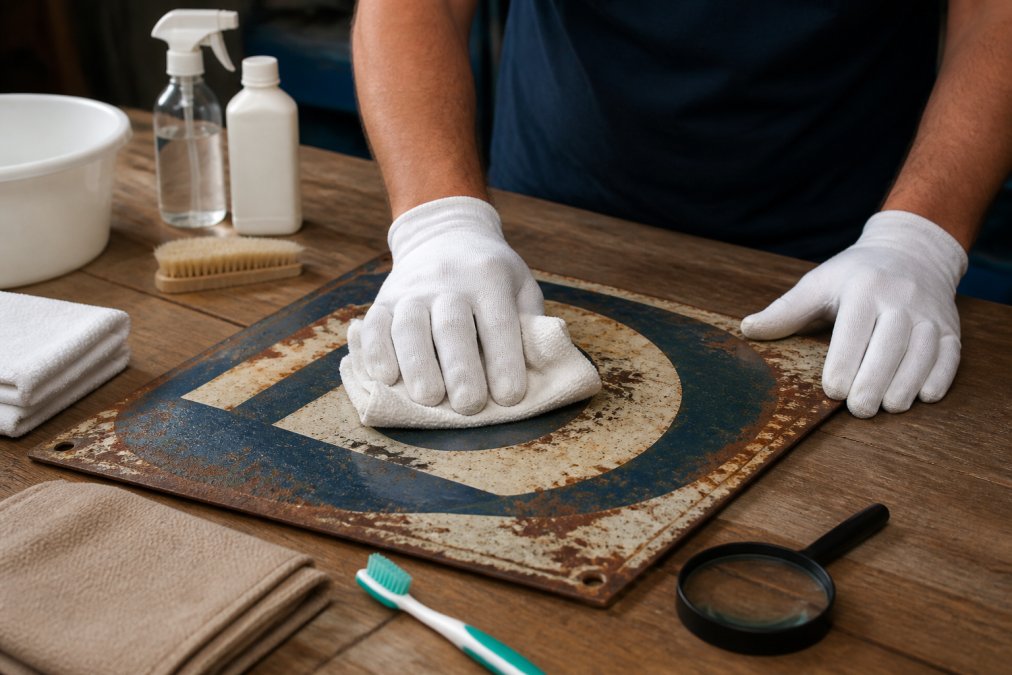
Step 1: Dry Dust and Surface Grime Removal
Start with a dry, soft-bristled brush. Work in light strokes from the centre outward. This lifts dust, soot, and loose surface grime without pushing grit across the paint.
Step 2: Gentle Washing for Enamel and Painted Surfaces
Mix a few drops of mild dish soap in warm water. Dampen, do not soak, your non-abrasive cloth. Wipe in small circles and rinse the cloth often.
Step 3: Tackling Stubborn Stains and Mildew
For mildew, mix a weak solution of citric acid or white vinegar with water. Test it on a hidden corner first. Apply with a soft brush, let it sit for a minute, then wipe clean.
Removing Rust from Painted Metal Signs
Removing rust from painted metal signs is where most people cause real damage. The goal is to stop corrosion, not to strip the sign back to bare metal, which destroys its antique value. The correct method depends entirely on what the sign is made of, because porcelain enamel, tin, steel, and aluminium each react differently to moisture, acid, and abrasion.
Identify the substrate first
- Porcelain enamel, a glass-like layer fused over steel. Non-porous and chemically resistant, but it chips. Rust appears at chips, drilled holes, and folded edges where the steel core is exposed.
- Painted tin, thin, soft, and easily bent. Paint flakes at stress points and rust blooms spread quickly under the coating.
- Painted steel, heavier and more stable, but rust creeps under the paint film from any scratch or edge.
- Aluminium, does not rust in the ferrous sense; it oxidises to a white or grey powdery film. Do not treat aluminium with the same rust removers used on steel.
A simple check: a magnet sticks firmly to steel and tin, weakly or not at all to aluminium. Porcelain enamel feels glassy and cool, and rings faintly when tapped.
Treating light surface oxidation
For a light bloom on painted steel or tin, a soft cloth and a little carnauba-based car wax will slow the oxidation without cutting through the paint. Work along the grain of the original finish, not in circles, and stop the moment the cloth picks up colour.
Spot-treating active rust
- Oxalic acid gel is the standard choice for painted steel and tin. It converts surface rust without attacking intact paint. Apply with a cotton bud to the rust bloom only, leave for the time stated on the label, then neutralise with distilled water and dry immediately.
- Phosphoric acid-based rust converters work on bare steel edges but will stain and dull painted surfaces, so mask the surrounding paint with low-tack tape.
- For aluminium, use a dedicated aluminium cleaner or a weak citric acid solution. Avoid caustic and ammonia-based products entirely, they pit the surface.
Sealing bare spots
Once the rust is stabilised and the area is bone dry, seal exposed metal with a thin coat of clear acrylic or a microcrystalline wax. A conservator-grade wax such as Renaissance Wax is widely used in museum settings because it is pH-neutral and reversible. Apply sparingly with a lint-free cloth and buff clear.
When to stop and call a conservator
If rust is deep, flaking, or has lifted the paint film across a large area, DIY treatment will make it worse. Aggressive rust removal can cut a sign's value far more than the rust itself. A professional conservator can stabilise active corrosion without altering the original finish, the outcome collectors actually pay for.
How to Preserve Antique Metal Signs and Protect Their Finish
Preservation is about slowing decay, not making an old sign look new. Shiny and restored usually means lower value to serious collectors. This is the part most guides get backwards: they assume every sign should be cleaned. In practice, the most valuable decision you will make is often to leave a sign alone.
What not to clean: the collector's rule
Original patina, the even, aged tone that develops on paint, enamel, and metal over decades, is a documented part of a sign's authenticity. Stripping it to chase a 'like new' look is the fastest way to halve a sign's market value. Leave the following untouched:
- Stable, even patina across the face of the sign. It is evidence of age and originality.
- Original decals and applied lettering, which are usually the most fragile and least replaceable elements.
- Signs with active flaking paint. Every wipe risks lifting more. Stabilise, do not clean.
- Signs with provenance, a known maker, an original hanging tag, or a documented history. Cleaning can erase the very marks that prove it.
When cleaning is justified
Clean only when the surface is actively deteriorating or when grime is hiding the artwork. Justified cases include:
- Bird droppings, which are acidic and will etch porcelain enamel if left.
- Active mould or mildew, which holds moisture against the surface.
- Grease or oil that is attracting grit and abrasion.
- Loose dust that has become a food source for insects.
Three preservation levers
- Control moisture. Store and display signs away from damp storage areas, basements, and leaky garages. Aim for stable relative humidity, large swings do more damage than steady conditions. Silica gel packs in a sealed display case help in humid climates.
- Limit light. Direct sun fades paint and breaks down decals over time. UV-filtering glass or acrylic in a display frame slows this considerably. Rotate displayed pieces rather than leaving one in permanent direct light.
- Add a reversible protective coating. A thin layer of microcrystalline wax or a pH-neutral protective sealant guards against surface oxidation and moisture damage. Reversibility matters, anything you apply should be removable by a future conservator without damaging the original finish.
Handling and display
Handle signs with clean cotton gloves. Finger oils and salts cause chemical reactions that etch into paint and enamel over the years. Support the sign from underneath rather than by an edge or a drilled hole, which can crack enamel. When you hang a sign, use soft mounts that do not press into the surface, and avoid screws through original holes if the sign is valuable.
Document before you intervene
Before any cleaning or preservation work, photograph the sign from multiple angles in consistent lighting, and note any existing damage. This record supports provenance, helps a future conservator, and gives a buyer confidence. For display pieces that suit a garage or den, wall hangings such as the Route 66 Wall Hanging let you enjoy the look.

Best Products for Cleaning Vintage Enamel Signs
The best products for cleaning vintage enamel signs are mild, pH-neutral, and free of abrasives. Enamel is tough, but its glossy surface scratches easily and shows every mark.
What works well:
- Mild dish soap in warm water for everyday surface grime
- A pH-neutral cleaner for fingerprints and light stains
- Citric acid or white vinegar diluted for mildew and hard water spots
- A microfiber cloth and soft-bristled brush for gentle scrubbing
- Car wax as a protective coating after cleaning
Common Mistakes That Damage Vintage Signs
The biggest threat to a vintage sign is not dirt. It is an owner who cleans too hard, too often, or with the wrong product.
Watch for these:
- Using abrasive pads or steel wool that scratch enamel and paint
- Soaking the sign or letting water pool in drilled holes
- Scrubbing decals, which are often the most fragile part
- Stripping patina in pursuit of a "like new" look
- Skipping a test patch and damaging the whole surface
Conclusion
Vintage signs reward patience. Clean gently, test everything first, and treat patina as an asset rather than a flaw.
Frequently Asked Questions
How do you clean old metal signs without removing the paint?
Use the gentlest method first. Start with a dry, soft-bristled brush or microfiber cloth to remove loose dust. For grime, mix a few drops of mild dish soap in lukewarm water, dampen a non-abrasive cloth, and wipe gently. Avoid scrubbing, abrasive pads, or harsh solvents. Rinse with a clean damp cloth and dry immediately. This approach lifts surface grime without touching the paint or decals underneath.
Is it safe to use vinegar on vintage enamel signs?
Vinegar is acidic and can dull or etch the glossy finish of porcelain enamel. It may also react with certain paints. For rust removal on painted metal signs, citric acid or a commercial rust remover formulated for delicate surfaces is safer. If you do use vinegar, test it on a hidden area first, dilute it, and rinse thoroughly. Never leave it on for long periods. Mild dish soap and water remain the safest everyday option.
How do you remove surface rust from a vintage metal sign?
For light surface rust, start with a soft-bristled brush or fine bronze wool and a pH-neutral cleaner. Work gently in one direction. For heavier rust, apply a small amount of citric acid paste or a rust remover gel, leave for a few minutes, then wipe away. Always test on an inconspicuous spot first. After treatment, rinse and dry completely, then apply a protective coating like car wax or a clear sealant to prevent recurrence.
What is the best way to protect a metal sign after cleaning?
Once the sign is clean and fully dry, apply a thin layer of car wax or a pH-neutral protective sealant. This adds a barrier against moisture, dust, and UV light. For enamel signs, a coat of clear car wax works well. Avoid oil-based products that can darken the finish. Reapply every six to twelve months, and store signs in a dry, temperature-stable area away from direct sunlight to preserve their antique value.
Caring for old metal signs takes the right tools and a light touch. Lost America Cool Classic Collectables curates vintage-inspired collectibles, from classic vehicle models to nostalgic wall hangings, so you can build a space with real character. Our pieces suit home bars, garages, and dens, and each one is chosen to bring timeless charm to your collection. Shop now and find your next classic piece.