
Table of Contents
- What Makes a Great Retro Decor Shop for Collectors
- How to Find Reliable Vintage Decor Suppliers Online
- Vintage Home Decor Authentication Tips
- Collectible Retro Decor Trends Worth Collecting
- Key Categories of Retro Decor for Collectors
- What to Expect When Shopping for Retro Decor
- Styling Retro Pieces in Your Home Without Clutter
- Frequently Asked Questions
Last Updated: September 19, 2026
What Makes a Great Retro Decor Shop for Collectors
A great best retro decor shop for collectors stocks pieces with documented provenance, transparent sourcing, and honest condition descriptions. Trust with dealers who understand your aesthetic matters more than a flashy website.
Lost America Cool Classic Collectables stands out because the curation is intentional. Rather than stocking everything vintage-adjacent, they focus on mid-century modern, Americana memorabilia, and collectible entertainment pieces that appeal to serious enthusiasts. The inventory reflects actual collector demand: slot machines, record players, vintage signage, and automotive memorabilia that tell a story beyond novelty value.
How to Find Reliable Vintage Decor Suppliers Online
Online sourcing requires relying on photography, descriptions, and seller reputation. Understanding dealer price tiers and logistics helps identify trustworthy shops.
Understanding Dealer Price Tiers and Budget Categories
Retro decor dealers operate across distinct price segments, each serving different collector needs and budgets. Understanding these categories helps you identify which shops match your collecting strategy.
Budget-Friendly Dealers (£20-£200 per piece) stock smaller accessories and entry-level collectibles with fast shipping and easy returns. Ideal for building foundational collections, though expect less detailed provenance documentation.
Mid-Range Specialists (£200-£1,500 per piece) curate mid-century furniture and collectible machines with detailed condition descriptions and restoration history. Expect longer timelines as they source intentionally and often work from established collector relationships.
High-End Investment Dealers (£1,500+ per piece) provide comprehensive authentication, provenance documentation, and professional shipping. Expect direct contact, detailed consultation, and willingness to negotiate on significant purchases.
Photography and Presentation Standards
Reliable suppliers provide multiple high-quality images showing maker's marks, serial numbers, condition details, and scale reference. Close-up images of wear and damage demonstrate transparency.
Condition Descriptions and Transparency Standards
Reliable suppliers describe condition specifically: "Original walnut finish with minor surface scratching; upholstery shows fading on seat cushion, no tears; all hardware original and functional." Dealers should disclose restorations, refurbishments, or reupholstering. Ask directly: "Is this original condition or has it been restored?" Clear answers build trust; hedging signals uncertainty.
Shipping, Logistics, and Delivery for Large Items
This is where many online dealers fail collectors. Large vintage furniture and machines require careful handling, and shipping logistics dramatically affect final cost and condition.
Large pieces like vending machines may be pickup-only due to shipping complexity. Ask whether dealers offer white-glove delivery (professional handling) or standard courier service. Reputable dealers provide damage guarantees and full replacement insurance. For high-value pieces, purchase additional shipping insurance.
Ask whether items are in-stock or sourced-on-request. If a dealer sources overseas, ask about turnaround times, customs responsibility, and damage rates. Local stock means faster shipping and easier returns.
Ask whether dealers offer restoration recommendations, specialist connections, or in-house restoration. Understand costs before purchasing damaged pieces.
Return Policies and Buyer Protection
Look for clear return policies. Ask about damage guarantees. Use payment methods offering buyer protection: credit cards and PayPal provide dispute resolution; bank transfers and cash do not.
Communication and Responsiveness
Reliable dealers answer questions promptly via email and phone. Test responsiveness before purchasing. For high-value purchases, request direct conversation with the dealer or owner to discuss authentication and condition.
Vintage Home Decor Authentication Tips
Authentication separates collectors from casual buyers and protects your investment from costly mistakes. Before spending serious money on any piece, develop a systematic verification approach that goes beyond visual inspection.
Documentation and Provenance
Request provenance documentation: acquisition history, sourcing, and previous ownership records. For high-value items, ask for photographs of maker's marks and serial numbers. Cross-reference serial numbers against manufacturer databases. Documented provenance commands premium prices.
Vintage Mills Jackpot Slot Machine →
Material and Construction Verification
Mid-century modern furniture should feature solid wood frames (walnut, teak, rosewood) or quality plywood veneer, not particleboard. Reproductions show visible glue lines, inconsistent grain, or veneers over inferior substrates. Original brass displays natural patina; too-shiny brass suggests recent replating.
Examine fastening methods: hand-forged nails (pre-1900), machine-cut nails (1900-1950), Phillips-head screws (post-1934). Hand-stitched upholstery suggests age. Reproductions mix fastening methods or use modern stapling throughout.
Manufacturing Marks and Labels
Learn manufacturer stamps, patent dates, and designer signatures, your most reliable authentication tools. A piece marked "Made in Japan" with a 1950s patent date is genuine; 1995 indicates reproduction. For slot machines, verify manufacturer and model year through serial number databases. A Vintage Mills Jackpot Slot Machine with verified production documentation commands significantly higher prices.

Red Flags and Common Reproduction Tactics
Red flags for reproduction: overly perfect finishes, uniform wear patterns, or artificially distressed surfaces. Genuine vintage shows honest, uneven wear. Beware mixed-era components without transparent disclosure. Vague language like "vintage charm" masks damage or reproduction. Investigate price inconsistencies, significantly cheaper pieces often indicate damage, reproduction, or missing documentation.
Third-Party Verification for High-Value Purchases
For significant investments, consider third-party authentication to protect purchases. Join collector communities and online forums, experienced collectors identify reproductions and maintain databases of known fakes.
Ask Sellers Direct Questions
Ask directly: "Is this original or restored?" "Can you provide the manufacturer's serial number?" "Do you have documentation of sourcing?" Detailed answers build credibility; deflection signals lack of expertise or intentional obscuring. Reputable dealers like Lost America Cool Classic Collectables welcome detailed authentication inquiries, this is the standard to expect.
Collectible Retro Decor Trends Worth Collecting
Mid-century modern furniture remains consistently sought after for clean lines and quality craftsmanship. Vintage Americana memorabilia, neon signs, and classic car models work in themed spaces. Antique lighting and decorative accessories offer accessibility. Vintage vinyl and entertainment pieces appeal to collectors and designers. Sustainable collecting reduces demand for new production while preserving history.
Key Categories of Retro Decor for Collectors
Mid-Century Modern Furniture and Homewares
Mid-century modern design defined the post-war aesthetic and remains the most sought-after category for serious collectors. The appeal lies in the marriage of form and function, pieces are beautiful precisely because they're designed for use. Credenzas, lounge chairs, side tables, and storage units from this era command strong prices because they're practical and sculptural.
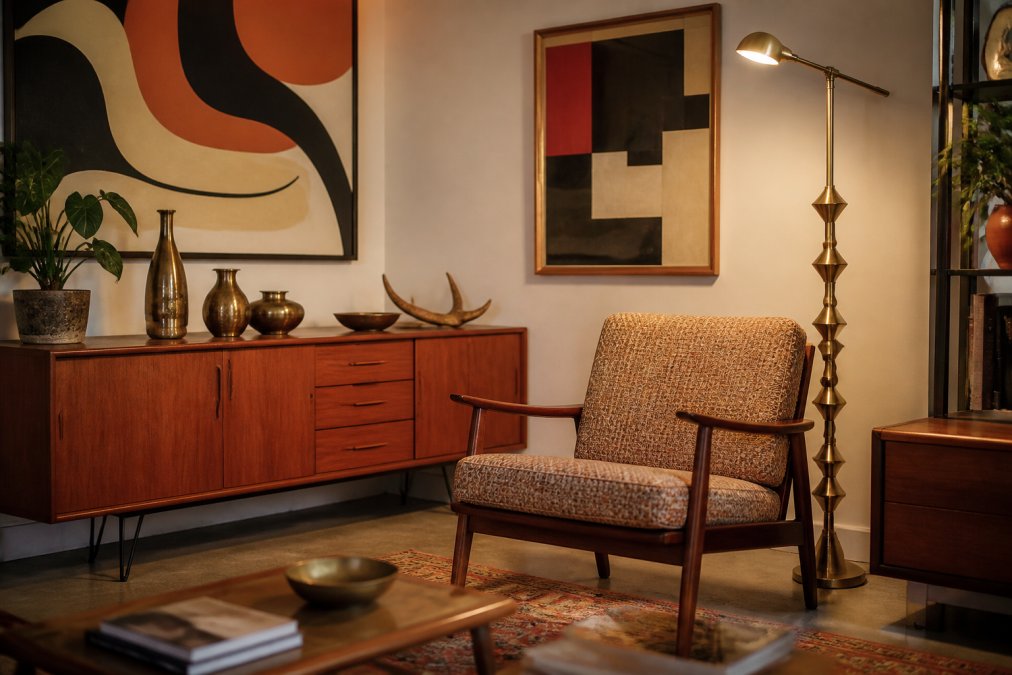
When evaluating mid-century pieces, focus on authenticity and condition. Original finishes matter more than perfect condition. A walnut credenza with honest wear tells a better story than one refinished to museum standards. Learn to recognise key designers and manufacturers.
Vintage Americana Memorabilia and Collectibles
Americana memorabilia includes advertising signs, vintage packaging, and iconic brand imagery. Slot machines like the Vintage Mills Jackpot Slot Machine combine mechanical interest and visual presence as focal points. Vending machines like Vintage Coke or Pepsi machines add authentic period character. Smaller pieces like Vintage Framed Elvis Presley Art offer affordable entry points for newer collectors.

Antique Lighting and Decorative Accessories
Vintage lighting fixtures combine sculptural design with functional illumination. Decorative accessories like a Vintage Telephone serve as functional décor and conversation pieces. Neon pieces like the Marilyn Monroe Collectors Edition Neon Radio combine nostalgic imagery with functional lighting, creating impact in dens and bars.
Vintage Vinyl, Media and Entertainment Pieces
Vinyl collecting has experienced genuine resurgence, driven by both audiophiles and collectors seeking tangible, physical media (Vinyl as Fine Wine: The Role of Expectation on the Perception of Music Format). Original pressings from the 1950s through 1970s appreciate steadily, especially sought-after albums in good condition. The appeal extends beyond sound quality, vinyl represents a tactile, intentional listening experience.
What to Expect When Shopping for Retro Decor
Understanding the buying experience shapes your success as a collector. Reputable shops like Lost America Cool Classic Collectables operate transparently about inventory, pricing, and logistics.
Styling Retro Pieces in Your Home Without Clutter
The difference between curated collection and cluttered accumulation lies in intentional placement and restraint. Collectors often struggle with this balance, each piece has value, so displaying everything feels right. It rarely is.
Frequently Asked Questions
How do I identify authentic vintage decor versus reproductions?
Authentic vintage pieces show signs of age: patina, wear patterns, and original manufacturing marks. Check for hand-applied finishes, period-correct materials, and maker's labels or stamps. Ask sellers for provenance details and photos of condition. Reputable retro decor shops provide documentation about item origins and age. If a piece looks too perfect or uniform, it's likely a newer reproduction designed to mimic vintage aesthetics rather than genuine period decor.
What are the most sought-after retro decor eras for collectors right now?
Mid-century modern (1940s-1960s) remains highly collectible, particularly pieces with clean lines and original finishes. 1950s Americana memorabilia, including classic car models and vintage signage, attracts strong collector interest. Art deco items (1920s-1930s) command premium prices for their craftsmanship. Vintage vinyl and record players appeal to both audio enthusiasts and design collectors. Neon signs and vintage advertising pieces have grown increasingly popular as statement decor. Collectors also seek out handcrafted and artisan pieces that showcase authentic period construction methods.
Can I return retro decor if it doesn't suit my space?
Return policies vary by retailer. Many vintage and retro decor shops offer returns within 14-30 days if items arrive damaged or misrepresented. Large pieces like furniture or vending machines often have specific conditions, including pick-up-only policies to manage logistics. Always confirm return eligibility and shipping responsibility before purchasing. Some sellers provide detailed photos and measurements to help you assess fit beforehand. Contact the shop directly before buying to clarify their guarantee and return process, especially for statement pieces like vintage machines or large furniture items.
How do I verify the reputation of an online vintage decor supplier?
Check customer reviews on the retailer's website and independent platforms. Look for feedback about item authenticity, condition on arrival, and shipping speed. Reputable suppliers clearly describe item condition, provide multiple photos, and list dimensions and materials. They respond promptly to questions and offer contact details for customer service. Avoid sellers who use vague descriptions, stock photos, or refuse to answer questions about provenance. Established shops often have physical showrooms or visit policies, allowing you to inspect pieces in person before committing to larger purchases.
What should collectors look for when buying retro decor online?
Examine high-resolution photos from multiple angles to assess condition, patina, and any damage. Read descriptions carefully for material composition, dimensions, and age verification. Check whether the item is in stock locally or dropshipped from overseas, as this affects delivery time and handling. Verify authenticity claims with maker's marks or certificates of provenance. Confirm shipping costs and methods, especially for fragile or large pieces. Ask about packaging to ensure items arrive safely. Compare pricing against similar pieces to ensure fair value. Choose suppliers who specialise in curated collections rather than random inventory, as this reflects deeper knowledge and selection standards.