
Table of Contents
- Prepare Your Classic Car for Display
- Classic Car Garage Lighting Tips
- Vehicle Positioning and Angles
- Collectible Diecast Car Models for Office Desks
- Car Show Display Board Ideas
- Era-Specific Props and Thematic Display
- Budget-Friendly DIY Display Solutions
- Frequently Asked Questions
Last Updated: September 29, 2026
Prepare Your Classic Car for Display
To display classic cars properly transforms them from parked vehicles into showpieces that command attention. Meticulous preparation across three critical areas, engine compartment, exterior paint, and interior detailing, ensures your collector car looks its absolute best.
Engine compartment detailing
The engine compartment tells the story of your restoration work. Even if visitors never open the bonnet, enthusiasts will, and they'll judge the entire vehicle by what they find there.
Clean every surface with degreaser and microfibre cloths, paying attention to hoses, brackets, and cable runs. A pristine engine bay signals thorough restoration. For show-ready presentation, apply a light protective coating to metal parts to prevent oxidation between shows.
Remove built-up grime from crevices using soft brushes and compressed air. Polish chrome details gently. The goal is meticulously maintained appearance that reflects the vehicle's era and the care of a dedicated collector.
Body gleam and paint correction
The exterior paint is what catches eyes from across a car show display. Achieving that mirror-like finish requires patience and the right technique.
Wash using the two-bucket method to prevent swirl marks, then dry completely. Inspect the paint surface and correct light swirls, oxidation, or minor scratches with compound and polishing pad in small circular sections.
For deeper defects, consider professional paint correction. After correction, apply quality automotive wax or ceramic coating to enhance gloss and ease maintenance between displays.
Interior detailing and tire shine
Vacuum thoroughly, including under seats and crevices. Wipe down all plastic, vinyl, and leather surfaces with appropriate cleaners.
Apply quality tyre shine with a foam applicator for a subtle sheen. Clean wheel wells and remove brake dust from inside the wheels.
Wipe down door jambs and ensure all glass is crystal clear, these finishing touches separate casual displays from show-ready presentations.
Classic Car Garage Lighting Tips
Strategic lighting reveals restoration craftsmanship and creates visual drama; poor lighting hides details and flattens colours.
Lighting and electrical safety
Before installing lighting, understand electrical demands and safety requirements. LED systems are preferable: they generate minimal heat, consume less power than halogen, and last longer.
Have new wiring installed by a qualified electrician to avoid fire hazards and insurance issues. Ensure your electrical panel has capacity and use a dedicated circuit for display lighting.
Install fixtures securely with hardware rated for their weight. For temporary setups, use portable LED lights on stable stands, positioned to avoid trip hazards.
Ground all metal fixtures properly to prevent electrical shock risk. Consult a professional if uncertain about any installation aspect.
Positioning lights for visual impact
Use three-point lighting: key light, fill light, and accent light.
Position key light at 45 degrees, 1.5 metres away to highlight contours. Place fill light opposite at a shallower angle to soften shadows. Aim accent light at engine bay or interior to emphasise restoration details.
Angle lights to rake across surfaces, emphasising texture and detail rather than pointing directly from the front. This reveals complexity in metallic or pearl finishes.
Adjust light intensity based on time of day. Use dimmable LED systems to adapt lighting based on conditions and features you want to emphasise.
Vehicle Positioning and Angles
Where you position your classic car within a display space determines how viewers experience it. The angle matters as much as the lighting.
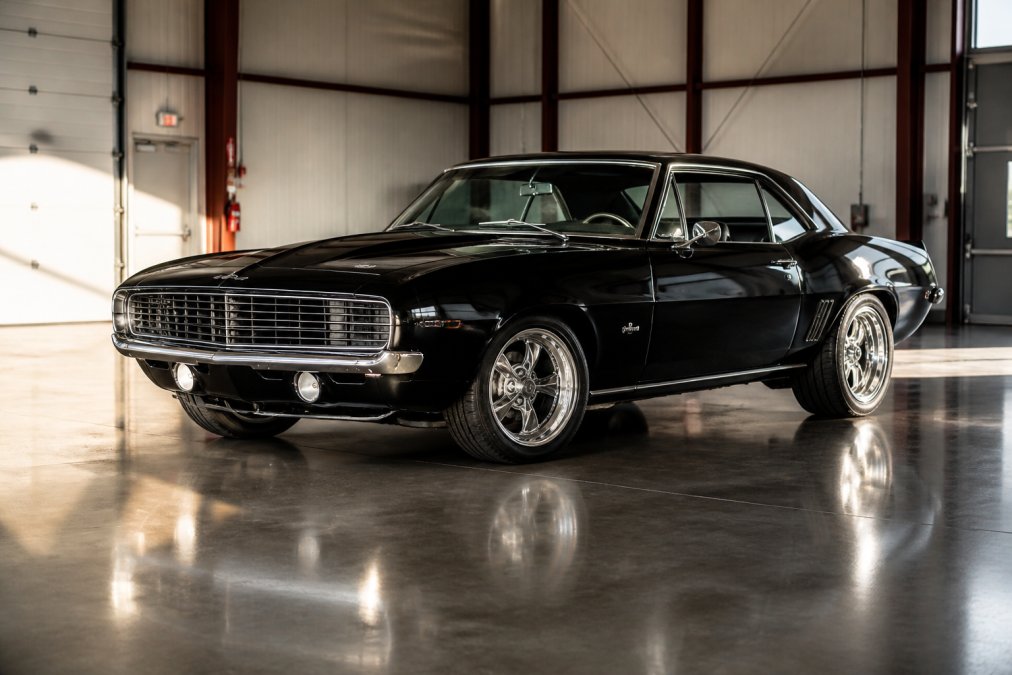
Creating the ideal viewing distance
Position your vehicle to allow 3 to 5 metres approach distance. Use a three-quarter view to showcase both front end and side profile, creating more visual interest than a profile view.
Position the vehicle so viewers encounter it at optimal distance. In larger garages, centre the car with space on all sides to allow 360-degree viewing.
Position the vehicle so anyone entering immediately sees the best angle, transforming casual glances into intentional viewing.
Using pedestals and stanchions
Pedestals and stanchions create visual hierarchy and protect your investment in smaller spaces.
Stanchions with red velvet ropes establish a professional car show aesthetic and discourage casual touching.
Use low pedestals to elevate diecast models to eye level, making scale and detail more apparent while protecting from damage. Arrange models chronologically or by manufacturer.
Choose pedestals that complement your space's aesthetic without drawing attention from the vehicle.
Collectible Diecast Car Models for Office Desks
Displaying classic cars extends beyond full-size vehicles. Collectible diecast models bring automotive passion into office spaces and home dens.
Choosing scale models that match your collection
Most diecast models use standard scales: 1:18 (larger, highly detailed), 1:24 (mid-size), 1:43 (smaller), or 1:64 (very small). Scale consistency creates visual coherence.
Choose a primary scale and build around it. Mixing scales works only when deliberately curating thematic displays with visual separation between groups.
Match model selection to your collecting interest. A carefully curated selection tells a more compelling story than a random assortment.
Lost America Cool Classic Collectables offers diecast models that complement full-size vehicle displays, allowing you to expand your collection across multiple scales and eras.
Display cases and shelving solutions
Glass display cases preserve condition while allowing visibility. Wall-mounted cases with LED lighting create a gallery effect.
Use sturdy, level shelving. Space models with breathing room and group by era, manufacturer, or colour to create visual harmony.
Mount LED strip lights along case tops to illuminate models without heat damage. Position to avoid glare on glass fronts.
Car Show Display Board Ideas
Information boards transform a vehicle display from visual spectacle into an educational experience. They tell the story behind the restoration and connect viewers emotionally to the vehicle.
Telling your vehicle's restoration history
Your display board should answer: What year was this vehicle made? How long did restoration take? What major work was completed?
Use before-and-after photographs arranged chronologically to show restoration progression.
Include original specification, colour, engine type, and trim level. Note significant modifications and special features.
Keep text concise with large, legible fonts. Mount at eye level, 1.5 metres from the vehicle.
Information boards and signage best practices
Use high-quality stock and clear typography. A simple two-colour scheme with one primary font looks more polished than multiple options.
Include your name or contact information to invite meaningful connections with fellow enthusiasts.
For permanent displays, use custom signage matching your space's aesthetic. For temporary shows, printed foam board is lightweight and professional.
Era-Specific Props and Thematic Display
Props and period-appropriate elements transform a display into a narrative experience, transporting viewers to your vehicle's era.
Muscle cars and pre-war classics
Muscle cars pair beautifully with era-specific memorabilia like vintage petrol pump replicas and period advertisements. The Harley Davidson Dual Gas Pump from Lost America Cool Classic Collectables ($2,000.00) serves as a stunning centrepiece.

Time-capsule items and automotive aesthetics
Time-capsule items are objects that define a specific era. For 1950s vehicles, consider vintage diner signage, period-correct fuel company logos, or classic automotive artwork. For 1970s classics, record sleeves, period magazines, or vintage concert posters establish context.
Budget-Friendly DIY Display Solutions
Professional car show displays can be expensive. Budget-conscious collectors achieve impressive results through thoughtful DIY approaches.
Floor protection and transport logistics
Protecting your garage floor from fluid leaks and tyre marks is essential. Absorbent floor mats designed for garages cost far less than professional epoxy flooring. These mats catch drips, protect concrete, and define the display space visually.
Creating visual impact without high costs
The most effective displays rely on fundamentals rather than expensive equipment. Meticulous detailing costs only time and inexpensive cleaning products. Strategic lighting requires only modest LED fixtures. Thematic props need not be expensive, vintage signage, period artwork, and automotive memorabilia are often affordable.
Frequently Asked Questions
What are the best lighting techniques for displaying classic cars?
Proper lighting highlights your vehicle's curves, paint, and chrome detailing. Position primary lights at 45-degree angles to the car's sides to create depth and dimension. Avoid harsh overhead lighting that creates flat shadows. LED spotlights offer energy efficiency and minimal heat, which is important for protecting your classic car's interior and paint. Combine ambient lighting with accent lights on specific features like the engine bay or wheels for showroom-quality presentation.
How do I arrange collectible diecast car models for office desks?
Group models by era, manufacturer, or theme to create a cohesive narrative. Use tiered shelving or display stands to vary heights and improve visibility. Keep models away from direct sunlight to prevent fading. Dust regularly with a soft brush to maintain detail clarity. Consider themed groupings, such as all muscle cars or pre-war classics, to tell a story. Small display cases protect models from handling damage while keeping them visible to visitors.
What should I include on a car show display board?
Your display board should tell your vehicle's restoration history and highlight unique features. Include the year, make, model, and engine specifications. Add before-and-after photos if you've completed restoration work. Describe any upgrades or modifications made. Keep text concise and readable from 1-2 metres away. Use high-quality images and professional signage to establish credibility. Include your contact information if you're open to inquiries about your restoration or collection.
How can I protect my classic car while it's on display?
Use protective floor coverings like rubber mats or interlocking tiles to prevent fluid spills and protect both your vehicle and flooring. Ensure proper ventilation to avoid moisture buildup, which causes rust and paint damage. Position the car away from direct sunlight to prevent UV damage to paint and interior materials. Maintain consistent temperature and humidity levels if displaying indoors. Install security lighting and consider basic alarm systems for valuable vehicles. Regular inspection and maintenance, including checking tyre pressure and topping up fluids, keeps your car show-ready.