
Table of Contents
- Understanding Retro Home Decor: What Beginners Need to Know
- Retro Colour Palettes for Interior Design
- Selecting Key Furniture Pieces and Accent Items
- How to Mix Vintage and Modern Furniture
- Avoiding Clutter with Vintage Home Decor
- Sourcing Authentic Pieces and Building Your Collection
- Displaying and Maintaining Your Retro Decor
- Frequently Asked Questions
Last Updated: September 28, 2026
Understanding Retro Home Decor: What Beginners Need to Know
Retro home decor is the practice of furnishing and styling spaces with pieces from past decades, typically mid-20th century, to create an atmosphere of nostalgia and timeless charm. Unlike simply collecting old items, authentic retro styling requires intentional curation, colour coordination, and an understanding of how different eras worked together aesthetically.
The challenge most beginners face isn't finding pieces, it's knowing which pieces work together, how to source authentic items versus reproductions, and how to avoid turning a space into a cluttered museum.
The distinction between a thoughtfully styled retro space and one that feels chaotic comes down to three fundamentals: understanding colour palettes from specific eras, selecting anchor pieces that define your aesthetic, and maintaining restraint. The most successful retro interiors use negative space strategically, letting curated pieces become focal points rather than visual noise.
Retro Colour Palettes for Interior Design
Each era had distinct colour preferences. The 1950s favoured warm tones: coral, mustard, soft greens, and creams. The 1960s introduced bolder colours: burnt orange, avocado, and teal. The 1970s leaned into earthy tones: olive green, rust, chocolate brown, and harvest gold. Understanding these palettes is essential for making retro home decor feel authentic rather than costume-like.
Pick your dominant colour, say, mustard or burnt orange, and build around it. Then introduce 1-2 accent colours that complement rather than compete. A 1950s kitchen with soft coral walls works because supporting colours (cream, chrome, pale yellow) feel cohesive; the same kitchen with coral, lime green, and hot pink becomes overwhelming.
Treat retro colour palettes as starting points, not rules. Use one or two colours from your chosen era as anchors, then soften with neutrals like cream, white, and soft grey to let curated pieces stand out.
Selecting Key Furniture Pieces and Accent Items
The foundation of any retro home decor scheme rests on selecting the right anchor pieces, typically larger items like a credenza, dining table, sofa, or sideboard. Begin with one statement piece that genuinely excites you; this becomes your visual anchor and guides every decision that follows.
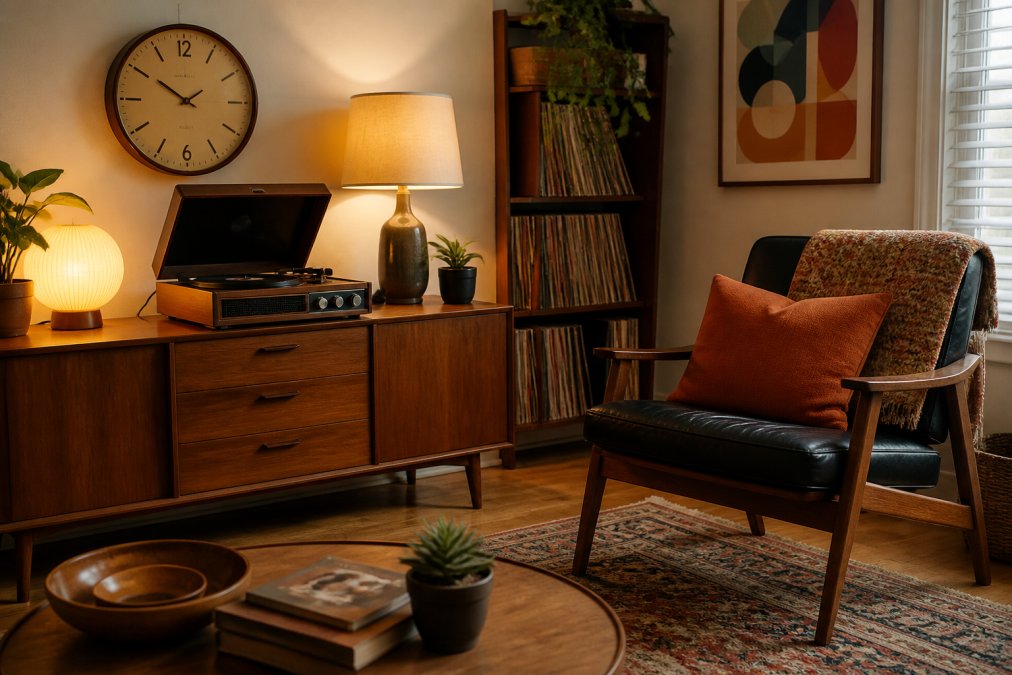
Once you have your anchor piece, accent items fill in the gaps: table lamps, wall clocks, decorative objects, and textiles. A vintage clock creates an instant focal point, while a wall decor set adds layered visual interest. A vintage record player serves double duty as both functional decor and conversation starter.

The key is proportion: if your anchor piece is substantial, keep accent items modest in scale. Think of it as visual hierarchy, one dominant piece, 2-3 secondary pieces, and several small accents that tie the scheme together.
How to Mix Vintage and Modern Furniture
The most liveable retro interiors blend vintage pieces with modern furniture and technology. A 1970s-inspired living room can include a contemporary sofa, as long as the colour and silhouette complement the era's aesthetic.
Use retro pieces for visual impact and modern pieces for comfort and function. A vintage credenza displays items; a modern sofa provides seating. This approach makes retro styling more accessible and budget-friendly.
When mixing eras, maintain visual consistency through colour and material. If your retro pieces feature warm wood tones and brass accents, choose modern pieces in similar finishes. A chrome-and-glass modern side table works alongside mid-century modern furniture. A sleek contemporary chair in a colour from your chosen retro palette (say, mustard or burnt orange) bridges both aesthetics naturally.
Avoiding Clutter with Vintage Home Decor
Clutter is the enemy of retro styling. Beginners struggle with accumulating too many pieces and not knowing how to display them without overwhelming a space.
The Curation Principle: Every Piece Must Earn Its Place
Every item should earn its place through either genuine function or authentic visual appeal. The most successful retro interiors use negative space strategically, letting curated pieces become focal points rather than visual noise.
A vintage telephone that works serves a purpose and becomes a conversation piece. A decorative figurine with no function must be genuinely beautiful and relevant to your aesthetic, displayed as part of an intentional vignette. Before acquiring any piece, ask: "Does this fit my colour palette? Does it relate to my chosen era? Will I actually use or enjoy it?" If uncertain, skip it.
Display Strategy: Vignettes Over Clutter
Create vignettes, small, intentional groupings of 3-5 related pieces, rather than filling entire walls or shelves.
Rotation and Seasonal Swaps
Renter-Friendly Retro Styling: Non-Permanent Solutions
The Restraint Rule
Sourcing Authentic Pieces and Building Your Collection
Understanding the difference between authentic vintage and reproduction pieces is crucial, especially when investing in larger items. Learning to spot the difference is a learnable skill that improves with practice.
How to Identify Authentic Mid-Century Furniture
Red Flags for Reproductions
Where to Source Authentic Pieces
Building Your Collection Strategically
Displaying and Maintaining Your Retro Decor
Displaying pieces thoughtfully matters as much as selecting them. Group wall art by theme, colour, or era. A gallery wall of vintage posters creates visual impact. A single large statement piece can anchor an entire room.
Frequently Asked Questions
How do I start decorating my home in a retro style?
Begin by choosing your retro era, 1950s, 1960s, or 1970s, and select a colour palette that reflects that period. Start with one room or space like a den or garage. Invest in 2-3 anchor pieces such as a vintage sofa, statement lighting, or wall art. Add textiles like throw cushions and rugs to build warmth. Use smaller collectibles like clocks, telephones, and decorative wall pieces to complete the look. Building your retro home decor gradually prevents overwhelming your space and allows your style to develop naturally.
What is the difference between vintage and retro decor?
Vintage decor refers to pieces from the past. Retro decor is retro-inspired, meaning modern reproductions designed to evoke the aesthetic of a past era without being original. Both have a place in retro home decor. Retro-inspired reproductions offer affordability and consistency. Many successful interiors blend both: statement pieces paired with reproduction accessories to achieve the look without the cost or rarity constraints.
How can I incorporate retro decor without making my home look cluttered?
Avoid clutter with vintage home decor by following the 70/30 rule: keep 70% of your space open and 30% decorated. Curate your collection ruthlessly, display only pieces that genuinely speak to you. Arrange items in intentional vignettes on shelves or walls rather than scattering them randomly. Use negative space to let each piece breathe. Store seasonal or overflow items elsewhere. Focus on quality over quantity: five carefully chosen mid-century modern pieces outperform twenty random collectibles. Stick to your colour palette so items feel cohesive rather than chaotic.
How do I mix vintage and modern furniture successfully?
Mix vintage and modern furniture by using colour and texture as connectors. Place a mid-century modern sofa alongside contemporary side tables in the same colour family. Balance ornate vintage pieces with clean-lined modern accessories. Use modern lighting to complement vintage furniture, and add contemporary artwork alongside retro wall decor. Maintain visual balance: if one wall features bold retro pattern, keep adjacent walls neutral. Choose one dominant style, if retro is your anchor, let modern pieces play supporting roles. This approach creates eclectic design that feels intentional rather than mismatched.
What are the best retro decor items for beginners to collect?
Start with functional pieces that anchor your space: a vintage clock, wall art, or statement lighting. The Vintage Cambridge Diner Clock ($90) or Vintage Clocks/Wall Decor ($100) from Lost America Cool Classic Collectables work beautifully as focal points. Add a Vintage Record Player ($50) if you have vinyl, or a Vintage Telephone ($40) for quirky charm. Textiles like throw cushions and rugs are low-commitment pieces that add warmth. The Vintage Wall Decor Set of 3 ($75) offers an affordable entry point for wall styling. Begin with items you'll actually use or display regularly rather than collectibles you'll hide away.
Where can I find authentic vintage-inspired collectibles?
Retro-inspired reproductions are available from retailers like Lost America Cool Classic Collectables, which curates vintage-inspired items designed to capture the aesthetic of past eras. Specialist retailers often provide detailed product information and quality guarantees. Mixing quality retro-inspired pieces from trusted retailers creates a cohesive collection that blends accessibility and affordability.
What colour palettes work best for retro interior design?
1950s retro uses warm pastels: soft pink, mint green, pale yellow, and cream paired with chrome or stainless steel accents. 1960s embraces bolder tones: burnt orange, mustard yellow, avocado green, and teal. 1970s features earthy warmth: burnt sienna, chocolate brown, olive green, and harvest gold. Choose one era's palette and stick to it for cohesion. Accent with neutrals like white, grey, or black to prevent overwhelming the space. Warm tones create inviting, nostalgic atmospheres, whilst cool accents add sophistication. Test colours in your actual lighting before committing to large pieces.
How do I maintain vintage and retro decor pieces?
Dust regularly with soft, dry cloths to prevent buildup on delicate surfaces. For wood furniture, use period-appropriate polish sparingly. Keep textiles away from direct sunlight to prevent fading. Store seasonal items in acid-free boxes in cool, dry conditions. Avoid harsh chemicals on vintage finishes. Rotate displayed items occasionally to prevent uneven fading. Quality retro-inspired reproductions from established retailers typically require standard household care, making them practical for everyday display.