
Table of Contents
- What Separates Authentic Vintage Neon Signs from Modern Reproductions
- Inspecting the Glass Tubes and Electrodes Before You Buy
- Electrical Safety Testing for Vintage Neon: A Pre-Purchase Checklist
- Shipping Fragile Neon Signs: What Sellers Get Wrong
- How Rarity, Provenance, and Condition Affect Collector Value
- Restoration vs Originality: Which Holds Value Long Term
- Maintenance and Longevity for Your Vintage Neon Signs
- Frequently Asked Questions
Last Updated: September 24, 2026
What Separates Authentic Vintage Neon Signs from Modern Reproductions
Buying vintage neon signs online comes down to one question: is the glow you're paying for original, or a modern tube bent to look old? Authentic pieces carry hand-blown glass, gas-filled tubes and decades of patina. Reproductions rarely do.
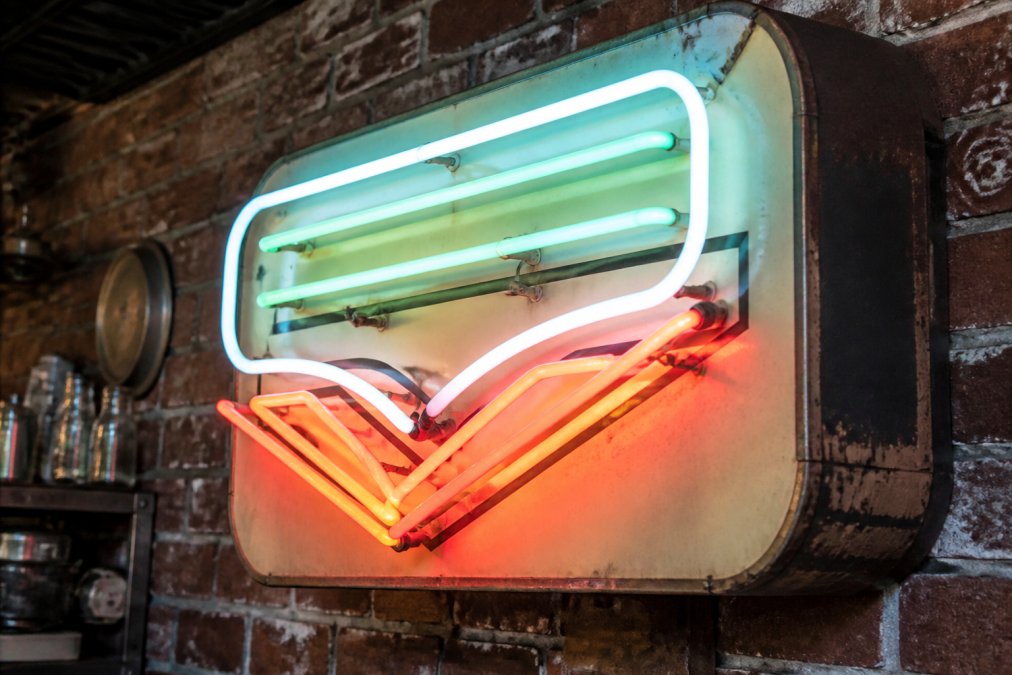
The Materials That Give Away a Reproduction
Modern reproductions cut corners in ways you can spot in photos:
- Glass tubing: original pieces use hand-blown glass with visible irregularities; reproductions use uniform, machine-drawn tube
- Metal casing: vintage signs sit in heavy steel or porcelain enamel; reproductions use thin alloy or plastic
- Visible electrodes: genuine tubes show their electrode ends; sealed modern units often hide them
- Phosphor coating: original coloured tubes relied on phosphor coating over neon or argon gas; cheap copies skip it
Inspecting the Glass Tubes and Electrodes Before You Buy
The inspection starts with the tubes, not the glow. Cracks, dark spots and uneven colour are the three faults that kill a sign's value.
Work through this list before you commit:
- Request daylight photos with the sign switched off
- Check each tube for hairline cracks near the electrode
- Look for blackened or burnt electrode ends
- Confirm the tube colour is even along its full length
- Ask for a short video of the sign running for at least ten minutes
Electrical Safety Testing for Vintage Neon: A Pre-Purchase Checklist
Electrical safety testing for vintage neon is not optional. Old transformers, perished wiring harnesses and ungrounded metal casings are the three most common hazards in secondhand signs, and most online listings give you nothing but a photo of the sign lit up.
Before you buy, confirm the following:
- Transformer is labelled and matches the tube load
- Wiring harness shows no cracked or brittle insulation
- Metal casing has an intact earth connection
- Mounting hardware is rated for the sign's weight
- The sign has been tested by a licensed electrician, with paperwork
How to Read a Neon Transformer Before You Buy
A neon transformer is not a generic power supply. It is a current-limiting device designed to push a specific voltage at a specific milliamp rating to strike and sustain the gas in the tube. Getting the match wrong is the single most common cause of premature tube failure.
- Input voltage, should match your mains supply (230-240 V in most domestic settings here).
- Output voltage, typically 2,000-15,000 V depending on tube length; a 6,000 V transformer driving a tube rated for 9,000 V will under-drive it and cause flicker.
- Milliamp rating, usually 20 mA, 30 mA or 60 mA. The tube's electrode rating must match, or the electrodes will blacken and fail early.
Testing a Vintage Unit Safely
Do not plug an untested vintage sign straight into a wall socket. A common pattern among collectors is to run the sign through a residual current device (RCD) protected outlet and a plug-in power meter for the first test, so any earth leakage or current draw anomaly trips before it becomes a fire risk.
A practical sequence:
- Inspect the plug and cord for perished insulation before anything is powered
- Confirm the earth pin is continuous to the metal casing with a multimeter
- Power up for 30 seconds, then check the transformer case temperature by hand, it should be warm, not hot
- Run for ten minutes and watch for flicker, dimming, or a change in the sound of the transformer
- Switch off and smell the transformer, a burnt varnish smell means stop
What a Pre-Purchase Inspection Should Cover
If you are buying a high-value piece, ask whether the sign has been inspected under the in-service testing regime referenced in AS/NZS 3760. A compliant inspection typically covers visual condition, earth continuity, insulation resistance, and a functional test of the transformer under load. Ask for the test tag or report, a seller who has had the work done will have paperwork.
Shipping Fragile Neon Signs: What Sellers Get Wrong
Shipping fragile neon signs is where most online purchases go wrong. Glass tubes crack under vibration, and a sign packed in bubble wrap alone rarely survives a courier network. The tubes are the problem: they are thin-walled, brittle, and often mounted only at a few points, so any flex in the casing transfers straight into the glass.
What a Proper Crate Looks Like
A crate that survives a courier network has four layers:
- Rigid outer shell, plywood or heavy double-wall corrugated, not a single-wall carton.
- Foam blocking, closed-cell foam or cut polystyrene that holds the sign clear of the crate walls on all six sides. The sign should not touch the outer shell anywhere.
- Separated tubes, if the tubes can be removed, they should be wrapped individually in foam and packed in their own compartment, not left mounted to the casing.
- Transformer removed, the transformer is heavy and will tear free in a drop, taking wiring and sometimes tube ends with it. It should be boxed separately inside the crate.
Ask the seller three questions before payment:
- Will the sign ship crated, not just boxed?
- Is the transformer removed and packed separately?
- Is the shipment insured for the full purchase price?
Choosing a Carrier for Glass-Based Freight
Not all carriers treat fragile freight the same way. General parcel networks are built for volume and speed, and a crate that is not palletised will be sorted by machine and stacked by hand. For anything larger than a small counter sign, the safer options are:
- Palletised freight, the crate is strapped to a pallet and moved by forklift, which removes most of the manual handling risk.
- Specialist art and antiques couriers, more expensive, but they handle glass and one-off items as standard, not as an exception.
- Dedicated fragile services within larger networks, ask specifically whether the service includes manual sorting and a signed chain of custody.
Insurance, Tracking, and Handling Damaged Arrivals
Insurance is only as good as the evidence you collect. Photograph the crate before opening it, and film the unboxing in one continuous take. If a tube arrives cracked, that footage is what makes an insurance claim stick.
A practical claim sequence:
- Photograph the crate on arrival, including any visible crush or puncture damage
- Film the unboxing without cuts, showing the packaging layers as you remove them
- Photograph the damage in situ before moving the sign
- Report damage to the carrier within their stated window, commonly a few business days, but check the specific terms
- Keep every piece of packaging until the claim closes, including the foam and the crate itself
How Rarity, Provenance, and Condition Affect Collector Value
Rarity, provenance and condition drive collector value more than size or brightness. A documented sign from a known brand will always outperform an anonymous piece in similar condition.
Restoration vs Originality: Which Holds Value Long Term
Originality wins in almost every case. A sign with its original transformer, wiring and tube pattern holds more long-term value than a fully restored piece, even if the restored one looks brighter.
Maintenance and Longevity for Your Vintage Neon Signs
Maintenance is simple if you stay ahead of it. Dust the tubes monthly with a dry microfibre cloth, check the wiring harness annually, and never run the sign continuously for days at a time.
- Mount the sign away from damp walls and direct water spray
- Use a surge-protected outlet to protect the transformer
- Switch off during electrical storms
- Have the earth connection checked every couple of years
- Store spare tubes flat, wrapped, and away from sunlight
Frequently Asked Questions
How can I tell if a neon sign is authentic or a reproduction?
Check the glass tubes for hand-blown irregularities and visible electrodes, and look for a porcelain enamel or metal casing with genuine patina. Reproductions often use uniform, machine-made tubes and modern plastic housings. Ask the seller for provenance details such as the sign's origin, age, and any restoration history. A certificate of authenticity from a reputable dealer adds confidence, but always cross-check the physical materials against the listing photos.
What electrical safety checks should I do before plugging in a vintage neon sign?
Before powering up, inspect the wiring harness for cracked or brittle insulation, and check the neon transformer or ballast for corrosion or burn marks. Test the sign on a surge-protected circuit and watch for flicker or dimming, which can indicate a failing transformer. If you are unsure, have a licensed electrician perform a safety test. Never bypass an earth connection, and replace any damaged plug or cord immediately to reduce shock and fire risk.
How are fragile neon signs shipped safely?
Reputable sellers crate signs in custom foam-lined boxes, with tubes supported individually and the transformer secured separately. Ask whether the sign is double-boxed and whether the courier provides fragile handling. Insurance and tracking are essential; confirm the seller's policy for damage during transit. If a sign arrives damaged, photograph the packaging and the damage before opening further, then file a claim immediately.
Are vintage neon signs a good investment?
Investment-grade neon signs are typically rare, well-documented, and in original or sympathetically restored condition. Signs with historical significance, such as those from defunct brands or iconic mid-century businesses, tend to hold value better than generic reproductions. However, condition, provenance, and market demand all affect resale. Buy what you love first, and treat any financial return as a bonus rather than a guarantee.
Buying vintage neon signs online rewards patience and a checklist, not impulse. The collectors who get burned are the ones who skip the inspection, the electrical questions, or the crating conversation. Lost America Cool Classic Collectables curates vintage-inspired neon and classic memorabilia for enthusiasts who want character without the guesswork, with pieces ranging from compact neon lights to statement bar fixtures. Shop the collection and find the piece that fits your space.