
Table of Contents
- Where to Find Authentic Vintage Americana Decor
- Route 66 and Classic Road Trip Memorabilia
- How to Date Vintage Americana Clothing and Collectables
- Styling Vintage Americana Home Decor in Modern Spaces
- Iconic Americana Icons: Coca-Cola, Elvis, and Harley-Davidson
- Building an Americana Collection: From Budget to Statement Pieces
- Frequently Asked Questions
Last Updated: October 1, 2026
Where to Find Authentic Vintage Americana Decor
When you shop for americana, authenticity matters, the difference between a genuine 1950s diner sign and a mass-produced reproduction can be thousands of dollars.
The challenge most collectors face isn't finding americana, it's finding the real stuff. This guide breaks down where serious collectors find authentic pieces, how to verify them, and how to build a cohesive collection.
| Source Type | Best For | Authenticity Risk | Time Investment |
|---|---|---|---|
| Specialist retailers | Curated, verified pieces | Low | Low |
| Estate sales | Rare finds, fair pricing | Medium | High |
| Online marketplaces | Convenience, variety | High | Medium |
| Auction houses | Investment-grade items | Low | High |
Route 66 and Classic Road Trip Memorabilia
Route 66 memorabilia is one of the most accessible entry points into americana collecting, with decades of merchandise from painted metal signs to vintage travel guides.

Look for Route 66 items from the 1930s-1970s. Original painted metal signs are most valuable; examine the backing for rust patterns consistent with age and weathering, not uniform artificial distressing.
Lost America Cool Classic Collectables stocks Route 66 pieces including the Route 66 Wall Hanging at $50.00, the Vintage Style Route 66 Case at $40.00, and the Vintage Diner Route 66 Painting at $60.00.


A metal sign from an actual Route 66 diner is worth substantially more than a reproduction. Learn the difference by studying auction results and specialist dealer catalogues.
How to Date Vintage Americana Clothing and Collectables
Dating vintage americana requires understanding the differences between textiles and hard goods.
Dating vintage Americana clothing: Textile composition and construction.
For clothing, check these markers in order: fabric composition labels, construction methods, and wear patterns. Genuine 1950s americana clothing shows specific stitching patterns and fabric blends that changed throughout the decade.
Fabric composition tells a timeline. "100% cotton" or "100% wool" labels date to pre-1960; polyester blends to the 1970s or later. Pre-1960 denim was 100% cotton with indigo dye that faded naturally; post-1970 denim often included synthetics that altered aging. For authentic styling, prioritise 100% cotton pieces from the 1940s-1960s.
Construction methods reveal era and authenticity. Pre-1950s workwear featured flat-felled seams; post-1960s used single-needle stitching. Examine seams for thread colour variations and hand-tied knots; modern reproductions are too uniform. Button holes on vintage pieces show hand-finishing; modern reproductions use automated machines.
Wear patterns authenticate textiles. Genuine vintage shows fading in high-friction areas and natural colour variation; artificial distressing on reproductions looks uniform. Vintage denim develops fade patterns based on wear; reproductions use sandblasting or chemicals for unrealistic, uniform fading.
Dating vintage Americana collectables: Materials, printing, and provenance.
Examine printing technique: Lithography (pre-1960) creates raised surfaces and colour gradations; offset printing (post-1960) produces flatter, uniform colours. Under magnification, lithographic prints show visible dot patterns; offset prints show finer dots. Lithography is nearly impossible to fake with modern technology.
Metal composition and rust patterns authenticate hard goods. Genuine rust develops in specific patterns based on metal composition; artificial distressing looks uniform. A genuine 1950s Coca-Cola tin shows rust at seams and edges; reproductions show evenly distributed patina. Vintage metal pieces are heavier due to thicker gauge metal.
Enamelware and painted finishes age distinctly. Vintage enamel chips follow metal grain or stress points; modern reproductions chip uniformly or not at all. Examine chip edges: genuine enamel shows distinct colour difference between layers; paint reproductions show gradual transition.
Verification and provenance documentation.
Age doesn't equal authenticity, a piece can be genuinely old but still a reproduction made to look older. Verify provenance: know where it came from and whether documentation exists.
Styling Vintage Americana Home Decor in Modern Spaces
The biggest fear most collectors have is that their americana collection will look cluttered or dated rather than curated. The solution isn't buying less, it's styling with intention, and understanding how authentic Americana textiles and materials anchor a cohesive aesthetic.
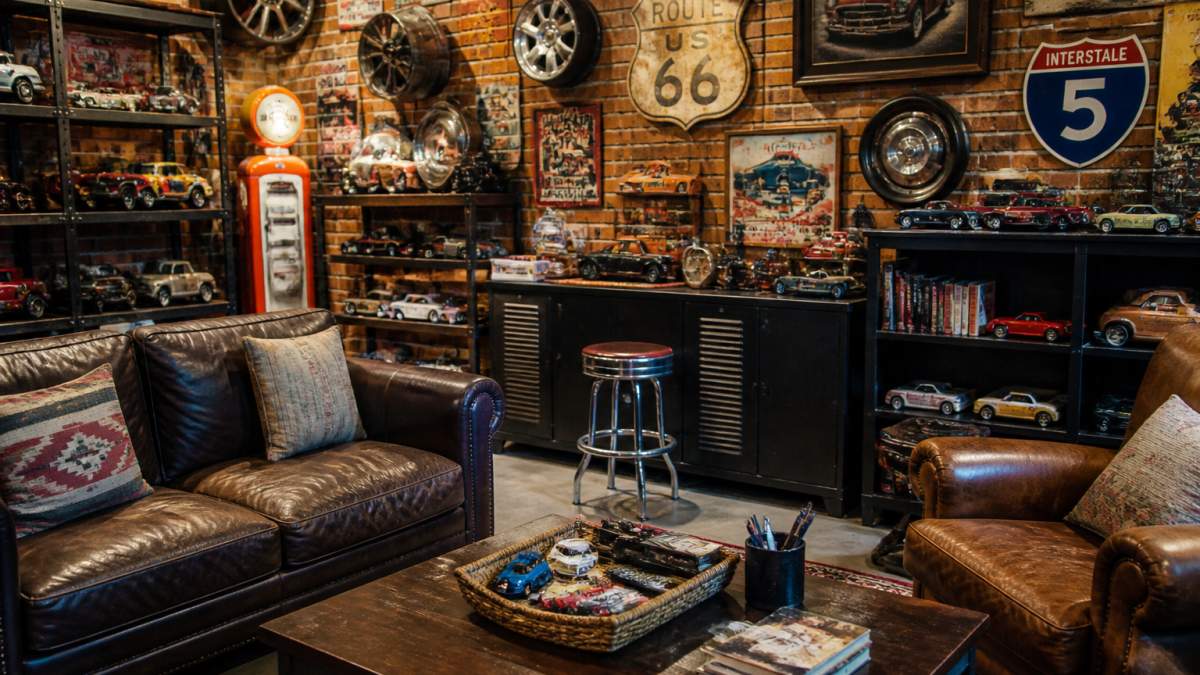
Start by choosing a focal point. In a garage or den, this might be a statement piece like the Harley Davidson Dual Gas Pump at $2,000.00. Prioritise pieces made from authentic materials: raw denim, heavyweight cotton canvas, enamelled steel, cast iron, and untreated wood. Modern reproductions with synthetic fabrics or thin metals clash with genuine vintage pieces.
Colour palette matters. Authentic vintage relied on reds, whites, blues, blacks, and metallics. Avoid mixing genuine vintage with contemporary neutrals (greys, beiges), which create visual tension. If styling around the Vintage 1924 Coca-Cola Calendar at $100.00, pair it with pieces in that era's palette, deep reds, cream, and black.
Room-by-room guidance: Garage, den, and kitchen require different approaches.
Garage spaces work best when you treat them as functional Americana environments. Vintage metal signage, petrol pump replicas, and motorcycle memorabilia should be arranged at eye level when standing or working. Use pegboards or wall-mounted shelving in raw wood or painted steel to display smaller collectables. The Harley Davidson Dual Gas Pump should occupy a corner or central wall where it's visible from the entry. Lighting is critical: warm overhead lights or vintage-style Edison bulbs cast shadows that highlight the patina and texture of metal pieces, whereas bright fluorescent lighting flattens everything and makes reproductions look cheap. Concrete or polished concrete flooring complements the industrial aesthetic; avoid carpet, which softens the space and looks incongruous.
Den and living spaces require tighter curation. Grouping works better than scattering: three related pieces, say, a vintage Coca-Cola calendar, a matching tin, and a period-appropriate sign, create visual weight and tell a story. Isolated pieces feel random. The Coca-Cola Set of 4 at $60.00 and the calendar work together to establish a cohesive collection rather than looking like random finds. Arrange these groups on shelving or gallery walls where multiple items create visual interest together. Scale matters: a small vintage sign on a large blank wall looks lost. Mount it alongside complementary pieces or use it as part of a gallery wall where the combined visual weight anchors the space.
Kitchen spaces benefit from functional Americana, vintage enamelware, tin canisters, and period-appropriate glassware that can actually be used or displayed in open shelving. This grounds the aesthetic in authenticity rather than pure decoration. A vintage diner-style clock, paired with genuine enamelware in matching colours, creates an immersive experience. Avoid mixing kitchen Americana with unrelated collectables; the space should feel like a coherent period environment, not a museum.
Material layering creates depth. Combine raw wood shelving with enamelled metal signage, cast iron pieces, and genuine denim or canvas textiles (vintage work jackets, aprons, or upholstered seating).
The key to avoiding clutter is restraint combined with material authenticity. Buy fewer, better pieces made from period-appropriate materials rather than filling space with quantity. A carefully curated collection of 8-12 items in authentic materials creates more impact than 50 reproductions in synthetic finishes.
Iconic Americana Icons: Coca-Cola, Elvis, and Harley-Davidson
Three brands defined mid-20th-century americana: Coca-Cola, Elvis Presley, and Harley-Davidson. Understanding these icons helps you shop for americana more strategically and spot authentic pieces.
Building an Americana Collection: From Budget to Statement Pieces
Start small if you're new to collecting. Entry-level americana pieces, vintage signs, promotional tins, smaller collectables, cost between $30.00 and $150.00. This lets you develop your eye for authenticity without risking significant money.
Frequently Asked Questions
How can I identify genuine vintage Americana decor versus reproductions?
Authentic vintage Americana pieces show signs of age: patina on metal surfaces, fading in original paint or graphics, and wear consistent with decades of use. Check for maker marks, manufacturing dates stamped or printed on the back, and material authenticity. Original Coca-Cola signage, for example, used specific metal weights and enamel formulations that differ from modern reproductions. Examine joints, fasteners, and construction methods, vintage pieces often use hand-riveted seams or period-appropriate manufacturing techniques. When in doubt, compare your piece against documented examples from the same era and manufacturer.
What makes authentic vintage Americana decor different from modern retro-inspired pieces?
Authentic vintage Americana decor carries genuine history, it was made during the era it represents, typically the 1920s through 1970s. Modern retro-inspired pieces intentionally recreate that aesthetic but lack the patina, imperfections, and original materials. Authentic pieces often feature superior craftsmanship, real brass or cast iron construction, and original finishes that have developed character over time. Collectors value authentic pieces for their historical significance and rarity. Retro-inspired alternatives offer affordability and consistency but won't have the same investment potential or storytelling power as genuine vintage finds.
What's the best way to style vintage Americana home decor without making a space look cluttered?
Focus on a cohesive theme rather than random pieces. Choose a specific era (1950s diner aesthetic, Route 66 highway culture, or classic automotive memorabilia) and build around it. Group similar items on shelves or walls rather than scattering them throughout the room. Use negative space, leave breathing room between displays so each piece stands out. Limit your colour palette to period-appropriate tones: reds, creams, chrome, and black work well together. Invest in quality display solutions like wall-mounted shelving or glass cabinets that showcase pieces without overwhelming the space. Start with statement pieces like a vintage gas pump or large wall art, then add complementary accessories.
Where should I start if I'm new to collecting Americana memorabilia?
Begin with an era or theme that genuinely interests you, whether that's 1950s diner culture, Route 66 nostalgia, or classic automotive brands. Start with smaller, affordable pieces like vintage calendars, framed art, or collectables priced under $100 to understand your preferences before investing in larger statement pieces. Visit curated retailers that specialise in authentic Americana to learn what quality looks like. Read about the history of your chosen theme so you can identify genuine pieces. Join collector communities online to get advice from experienced enthusiasts. Once you've built foundational knowledge, you'll be confident investing in higher-value items like vintage gas pumps or rare advertising signs.