
Table of Contents
- What Makes a Classic Car Model Authentic
- Understanding 1/18 Scale Diecast Cars in Australia
- Verifying Condition: Mint, Pre-Owned, and Limited Editions
- How to Clean and Maintain Diecast Models
- Rare Vintage Model Car Appraisal and Investment Value
- Where to Buy Authentic Classic Car Models
- Building a Muscle Car Collection That Works in Your Space
- Frequently Asked Questions
Last Updated: October 2, 2026
What Makes a Classic Car Model Authentic
Authenticity in classic car models starts with manufacturer markings and materials that reflect the original production standards. When you're looking to buy authentic classic car models, the first thing to verify is whether the piece carries legitimate factory stamps, serial numbers, or certification marks from the original manufacturer.
Build quality tells the story immediately. Authentic diecast vehicles feature consistent paint finishes without runs or drips, precisely aligned body panels, and interior details that match factory specifications. The weight should feel substantial, genuine diecast uses zinc alloy or die-cast metal rather than cheap plastic substitutes. When you hold a real 1:18 scale model, the doors, bonnet, and boot should open smoothly with satisfying mechanical resistance, not flimsy plastic hinges.

Materials matter more than most collectors realise. Authentic classic car models use real rubber tyres (not painted plastic), metal wheels with proper hub detail, and glass windows that are actually transparent rather than printed on the body.
Understanding 1/18 Scale Diecast Cars in Australia
The 1:18 scale remains the most collectible proportion for classic car models because it strikes the perfect balance between detail visibility and display practicality. At this scale, a full-size vehicle becomes approximately 25 centimetres long, large enough to showcase interior trim, engine compartments, and exterior badging with genuine clarity, yet small enough to fit comfortably on a shelf or display cabinet without dominating a room.
Why 1:18 dominates the collector market comes down to manufacturing precision. At this size, toolmakers can create intricate moulds that capture authentic details: dashboard instruments with readable dials, seat stitching patterns, and exterior trim lines that match the original blueprints.
Other popular scales serve different collecting purposes. The 1:24 scale sits between 1:18 and smaller options, offering a middle ground for collectors with space constraints. Models at this scale run approximately 18 centimetres long and still deliver impressive detail work, though some fine interior elements become less distinct.
Verifying Condition: Mint, Pre-Owned, and Limited Editions
Condition grading determines both the visual appeal and investment potential of classic car models. Mint condition means the model remains in original factory packaging, never displayed or handled, with no dust, paint wear, or mechanical issues. Pre-owned models that have been carefully displayed show minor dust accumulation but retain all original components, working mechanisms, and intact paint. Heavily used models may have loose doors, worn paint, or missing interior pieces, these typically cost 40-60% less but require careful assessment before purchase.
Limited edition releases carry special significance for collectors because manufacturers produce them in restricted quantities, often with unique colour variations or exclusive details.
Auction results provide reliable benchmarks for assessing value. When you track what similar models have sold for at collector auctions, you understand the realistic market price for your condition grade.
How to Clean and Maintain Diecast Models
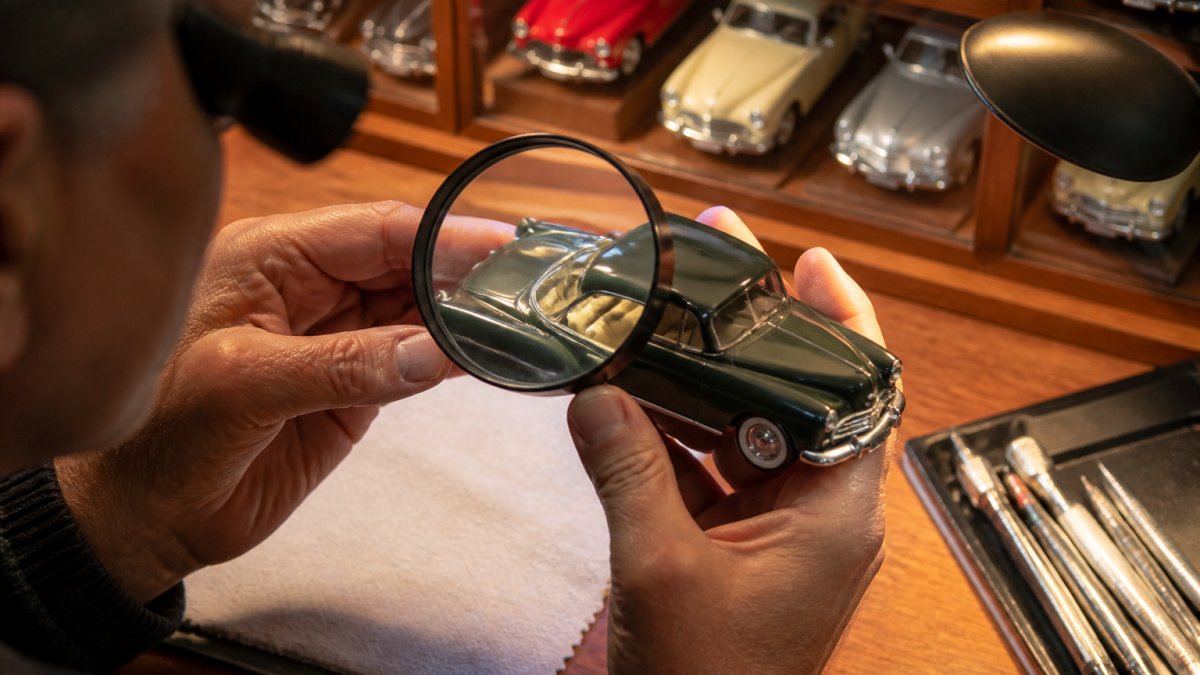
Cleaning diecast models requires a gentle approach that removes dust without damaging paint finishes or detail work.
Storage and display conditions directly affect longevity. Keep models away from direct sunlight, which fades paint and causes plastic windows to become brittle over time. Display cabinets with UV-filtering glass protect your collection while allowing visibility.
Never use commercial car polishes or waxes on diecast models. These products are formulated for full-size vehicles and leave residue on the small-scale paint that's difficult to remove.
Rare Vintage Model Car Appraisal and Investment Value
Rarity and provenance form the foundation of investment value in classic car models. A model's rarity depends on production run size, age, and how many examples survived in good condition. First-edition releases from the 1960s and 1970s command premium prices because fewer were manufactured and many have deteriorated over decades. Provenance, the documented history of ownership, adds credibility and value, especially if a model belonged to a notable collector or appeared in published collections.
Tracking auction results reveals market trends and realistic valuations. When you research what similar models sold for over the past 12-24 months, you develop a sense of fair pricing. Vintage muscle car models, particularly American classics from the muscle car era, consistently appreciate because demand from nostalgic collectors remains strong.
Investment potential improves when you focus on models with documented authenticity and provenance. A first-edition 1:18 scale model with original packaging and certificate of authenticity holds value far better than an unmarked example of the same model.
1948 Chevrolet Fleetmaster Woody 1:18 →
Where to Buy Authentic Classic Car Models
Local sourcing offers advantages that international purchasing cannot match. When you buy from established retailers in your region, you can inspect models in person before purchase, verify authenticity immediately, and avoid extended shipping delays.
International options expand your choices significantly but introduce shipping complexity and potential authenticity risks. Overseas auctions and specialist retailers offer rare models unavailable locally, but shipping costs, customs duties, and international payment methods add expense.
Payment methods have evolved to accommodate collector preferences. Many retailers now accept Afterpay and similar buy-now-pay-later services, allowing you to spread costs across multiple payments without interest.
Lost America Cool Classic Collectables stocks authentic 1:18 scale models like the 1948 Chevrolet Fleetmaster Woody, allowing you to examine quality firsthand before deciding. The team understands collector priorities and sources pieces that deliver genuine detail and build quality.
Building a Muscle Car Collection That Works in Your Space
Curating by theme creates visual cohesion that transforms scattered models into a purposeful display.
Scale consistency matters for visual balance. When you display only 1:18 scale models on a shelf, the uniform size creates professional appearance and makes each model's detail work equally visible.
Display solutions adapt to your available space. Wall-mounted shelving with adjustable spacing accommodates collections of any size without consuming floor area.
Small spaces benefit from vertical organisation. A wall-mounted display using floating shelves or glass ledges draws the eye upward and creates impressive visual impact without consuming valuable floor or desk space.
Building an authentic classic car model collection requires patience, knowledge, and access to reliable sources. The distinction between genuine collectables and convincing reproductions comes down to manufacturer details, build quality, and verifiable provenance, elements that separate investment-grade pieces from decorative replicas.
At Lost America Cool Classic Collectables, we've curated a selection of verified authentic models that deliver the detail and quality serious collectors demand. When you purchase from us, you're acquiring pieces backed by our commitment to collector standards. Shop our classic car model collection and build the display you've envisioned.
| Scale | Best For | Typical Length | Detail Level |
|---|---|---|---|
| 1:18 | Detailed display, premium collections | 25cm | Maximum interior and engine detail |
| 1:24 | Space-conscious collectors | 18cm | Strong detail, compact footprint |
| 1:43 | Racing models, large collections | 10cm | Good detail, maximum display capacity |
According to collector community standards from major diecast forums, proper storage at consistent temperature prevents the paint degradation and mechanical failure that plague poorly maintained collections. The Diecast Model Collector's Association guidelines emphasise that climate control and UV-filtered display remain the most significant factors in long-term value preservation. Research from automotive memorabilia market analysis shows that models stored in original packaging with documented provenance appreciate at rates significantly higher than unpackaged examples, making authentication and careful storage essential investment strategies for serious collectors.
Frequently Asked Questions
How can you tell if a diecast car model is authentic?
Authentic diecast models have clear manufacturer markings, consistent paint finish without drips or overspray, and properly aligned interior details and chassis components. Check the packaging for correct branding and printing quality. Reproductions often have rough welds, uneven paint, or missing details. Examine the weight and metal quality, genuine diecast feels substantial and balanced. If buying pre-owned, verify the model's provenance through auction records or collector databases to confirm its authenticity and history.
What are the most popular scales for classic car models?
The 1:18 scale remains the most sought-after by serious collectors because it offers exceptional detail and a commanding presence on display shelves. The 1:24 scale provides a good balance of detail and space efficiency, making it ideal for collectors with limited room. The 1:43 scale is popular for those building large collections without overwhelming their space. Each scale appeals to different display needs, 1:18 for feature pieces, 1:24 for themed collections, and 1:43 for comprehensive motor sport history displays.
Are classic car models a good investment?
Limited edition diecast models, particularly rare 1:18 scale replicas of iconic muscle cars, are highly sought after if kept in mint condition with original packaging. Potential value depends on rarity, condition grading, and documented provenance. Pre-bidding at auctions shows strong demand for specific models. However, models displayed or handled regularly may lose value more quickly. Focus on collecting pieces you genuinely enjoy, potential returns are secondary to the pleasure of owning authentic, detailed replicas of motorsport history.
What should I look for when buying vintage model cars online?
Verify the seller's authenticity credentials. Request clear photos showing the paint finish, interior detail, and chassis condition from multiple angles. Confirm the model's scale and whether it's a limited edition release. Review the shipping insurance and return policy before purchasing. Ask about condition grading, whether it's mint, pre-owned, or used, and request documentation of provenance if buying rare pieces. Reputable sellers like Lost America Cool Classic Collectables provide product descriptions.